
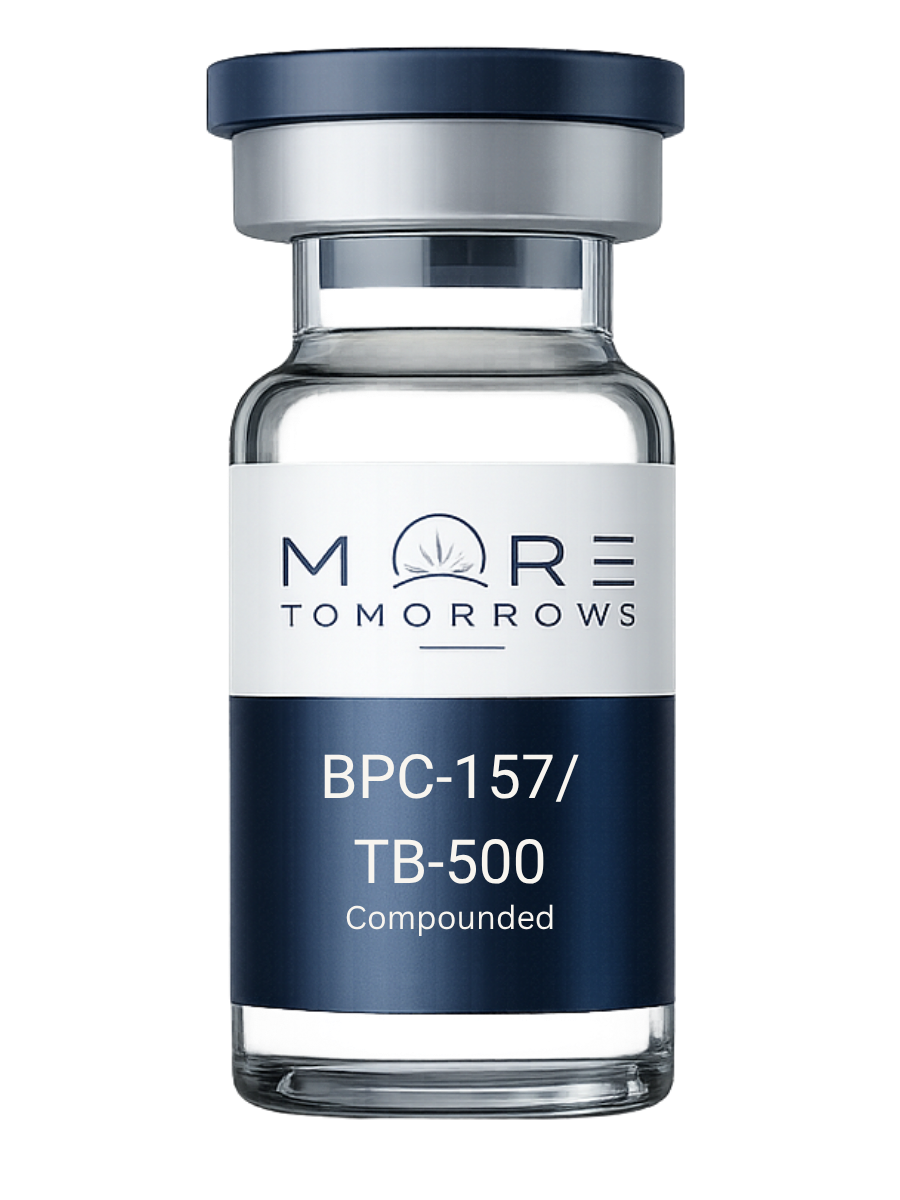
BPC-157 / TB-500 Compounded
Combined peptide support for soft-tissue and connective-tissue recovery
Every protocol is reviewed and prescribed by a licensed physician after your medical intake. Adding to your order does not charge you - it simply builds the treatment list your clinician reviews.
Compounded medications are dispensed by a licensed US pharmacy and shipped directly to your door.
What it is
This compounded blend pairs BPC-157 with TB-500 in a single vial. It's typically chosen when a clinician wants both repair-signaling peptides in one protocol.
How it works
BPC-157 is studied for tissue-repair signaling; TB-500 is a fragment related to thymosin beta-4, studied for cell migration and flexibility of connective tissue. Human evidence for both is limited.
Who often asks about it
- Active adults in a dedicated recovery block
- People whose clinician recommends combined soft-tissue and connective-tissue support
How it's taken
Subcutaneous injection from a single combined vial across a 28-, 56-, or 84-day cycle as directed.
What to expect
Most protocols run the full cycle before reassessment. Individual results vary and are not guaranteed.
Safety & screening
- Human clinical evidence is limited for both peptides.
- Disclose any history of cancer or active malignancy during intake.
- Injection-site reactions and short-lived fatigue are the most common reports.
- Share your full medication list, medical history, and any allergies during intake.
- Not for use if you are pregnant, planning pregnancy, or breastfeeding unless your clinician says otherwise.
- Stop use and contact your clinician or seek medical care if you experience an unexpected or severe reaction.
Common questions
- Is this FDA-approved?
- This is a compounded medication prepared by a licensed US pharmacy for an individual patient. Compounded preparations are not FDA-approved products and are only dispensed after a licensed clinician reviews your intake and determines the therapy is appropriate for you.
- Why the combination?
- Some clinicians prefer covering both repair pathways in one vial for simplicity and adherence.